A good Marmaris driving day starts with knowing where the car will stand at both ends. Choose the outing, identify a suitable parking option and leave space in the timetable for walking and finding an alternative. Vrenty Car brings those decisions together here. This is practical planning guidance, not a live register of parking spaces, current charges or street restrictions; check the signs and conditions where you actually stop.
Park for the visit you want to make
For a walk around the waterfront or centre, think of parking as a separate destination. Navigating directly to a shop, restaurant or landmark may bring you to a pedestrian approach, a narrow entrance or a place where stopping is prohibited. Identify a lawful parking area first and then check the remaining walk. A space slightly farther away can be more practical than repeatedly circling the exact destination, provided the route on foot suits your group.
Consider the least mobile passenger, the heat and what you will carry back. A pleasant walk with a small bag can feel different with shopping, a tired child or beach equipment. If a passenger needs to be dropped nearby, check a lawful stopping place separately; a convenient kerb is not automatically available. For Marmaris car rental, manageable vehicle dimensions and a clear parking plan often contribute more to an easy visit than an upgrade to a larger class.
Ask what hotel parking actually includes
Before booking accommodation or deciding to keep a car overnight, ask whether parking belongs to the property, is shared, or is simply available somewhere nearby. Confirm any charge, reservation process, entrance instructions and opening restrictions. If a space cannot be reserved, identify an alternative before your first late return. Do not rely on a photograph showing cars outside the building as evidence that guests may park there throughout the stay.
Check the practical approach as well as the space itself. A garage can have height or width constraints, and an entrance may be reached from a different street than the pedestrian reception. Ask about barriers and any procedure for arriving after hours. The hotel collection guide explains why delivery access is a separate question: permission for a representative to hand over a car does not automatically give the renter overnight use of that spot.
Read the complete parking instruction
At the actual location, look for signs that describe who may park, when payment applies, how long you may stay and whether particular spaces are reserved. Check the entrance and any supplementary boards rather than relying only on markings beside one space. If the instructions are unclear, ask the operator or choose somewhere with understandable conditions. Another vehicle already being there is not evidence that your use is permitted.
Do not apply a universal colour rule to all Marmaris kerbs or assume that an unmarked area is free. Local arrangements and temporary restrictions can change. A review from a previous season can be useful background but cannot grant permission today. Leave access points, pedestrian routes and emergency space unobstructed. The aim is to make a positive decision based on the conditions in front of you, rather than hoping an ambiguous space will be overlooked.
Keep evidence of payment and the place you used
Where payment is required, establish the accepted method, rate basis and any closing time before leaving the car. Follow the displayed process, including any need to enter the registration correctly or display a ticket. Keep the receipt or digital confirmation and note the parking location. If an attendant handles payment, ask for the appropriate evidence and clarify when the charge ends. Avoid assuming that a payment to an unknown person makes an otherwise restricted space lawful.
Photograph the relevant sign if you may need to refer to the conditions later, without collecting unnecessary personal information about others. Set a reminder when a time limit applies, allowing time to walk back. If you extend a visit, check whether the parking arrangement can actually be extended rather than treating additional payment as automatic permission. A modest parking record can prevent confusion when a later query arrives after you have left the area.
Get comfortable before entering busy streets
At collection, adjust the seat, mirrors and controls while stationary. Find the lights, indicators, ventilation and parking brake, and ask how to use any feature you do not recognise. Check the vehicle's dimensions in relation to your usual car. If a replacement differs substantially, take time to understand it. It is easier to learn the controls in a suitable stopping place than while following navigation through unfamiliar junctions.
Set the route before moving and let a passenger handle non-driving tasks where possible. Use a securely positioned navigation device without letting it obstruct the view. If you miss a turn, continue lawfully and reroute from a safe place rather than making a sudden correction. Leave room around the vehicle and anticipate pedestrians, scooters and vehicles manoeuvring near parked cars. Avoid national stereotypes about drivers; respond to the traffic you can actually see.
Use current rules and signs, not remembered numbers
Check current official driving guidance relevant to your licence and circumstances before travelling, and follow posted limits and instructions on the road. This page does not publish a single speed figure for every road around Marmaris because road type, vehicle and local signs matter. Seat belts, appropriate child restraints and an attentive driver belong in the plan for even a short journey. Resolve equipment requirements before collecting the vehicle.
The UK official Turkey travel advice advises particular care on roads at night and attention to official instructions at checkpoints. Its licence guidance is written for the relevant UK circumstances, so do not generalise it to every nationality. For your own documents, check the appropriate official source and the supplier's acceptance conditions. Rental eligibility and permission to drive are related questions, but one should not be used as a substitute for checking the other.
Prepare coastal drives as separate outings
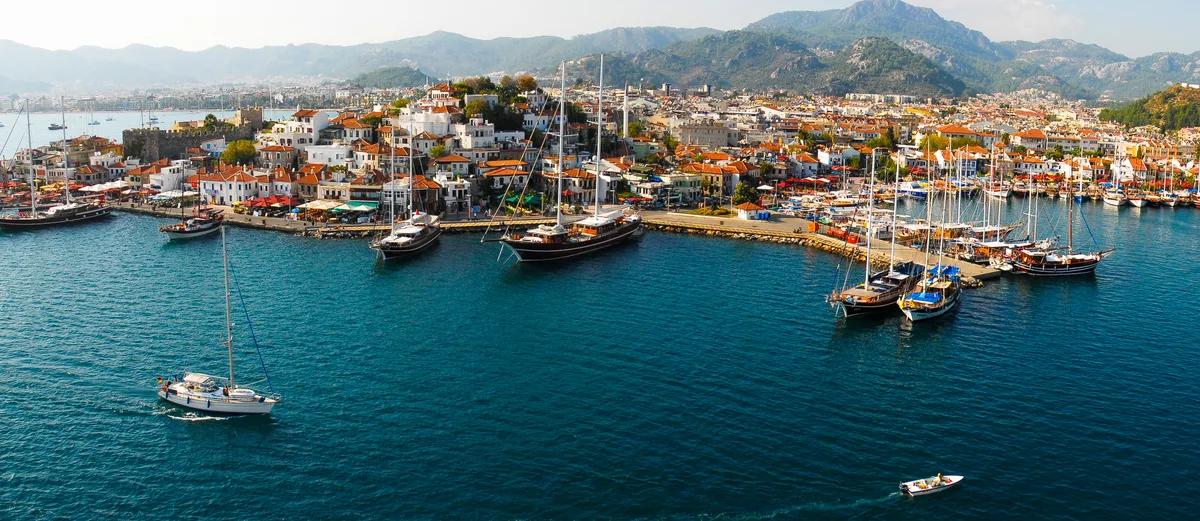
A map can make nearby bays look like a continuous promenade, but a driving itinerary includes the road approach, parking and the walk to the water. For Icmeler and Turunc, decide whether one destination is enough before adding a second. For Selimiye and Bozburun, choose which harbour deserves the longer stop. That keeps the day centred on what you want to do outside the car.
Use current navigation for the chosen route and review it before departure. Build in stops and a return margin instead of treating the fastest displayed journey as a schedule for the whole day. Do not stop on a bend or obstruct a road to take a photograph. If you cannot find an appropriate place, continue. An appealing view does not justify creating a hazard, and there will be other opportunities to pause safely.

Recognise when a suggested shortcut is the wrong choice
Navigation software can suggest a road that is unsuitable for your rental or your comfort. Look at the route rather than following every instruction unquestioningly. If the surface, width or access status becomes doubtful, stop safely and reassess. A detour on a permitted public road is preferable to entering a track merely because it appears shorter. Keep a route back to a known road in mind, particularly when approaching a beach or rural property.
Current Localrent Turkey conditions limit rental use to paved public roads. Check your agreement and do not treat an SUV as an exception. The deposit and insurance guide explains why permitted use and protection must be read together. If a destination requires access you cannot confirm, leave it out or reach it through a separately suitable transport arrangement. There is no need to turn an optional stop into a contract problem.
Let weather and daylight change the plan
Check the current forecast and any local authority instructions before a longer outing. Hot conditions can make walking and waiting beside a parked car uncomfortable; heavy rain can make an ambitious route less appealing. Bring water and plan places to rest. Do not leave a child or vulnerable passenger in a parked vehicle. A beach day can be shortened without losing its value, especially when the driver is tired.
In periods of fire risk or severe weather, follow closures and official directions. Do not drive towards smoke for a better view or assume an unmarked side road bypasses a restriction. Check the day's sunset time and work backwards from the return you want. Daylight planning is a choice about comfort and margin, not a promise that every road becomes unsafe at a particular hour. If night driving is outside your confidence, design the itinerary accordingly.
Manage fuel and navigation before they become urgent
Confirm the correct fuel for the car and the return fuel arrangement at collection. Plan refuelling with enough margin that one closed or busy station does not dominate the day. Keep the receipt when it may help explain the final fuel level. Do not try to estimate the last possible moment for a stop from an unfamiliar dashboard. Fuel availability on your intended route should be checked in current navigation rather than assumed from a general travel description.
Save essential route information and the supplier's contact details offline, and carry a suitable charging cable. A map saved as a picture can help orientation but may omit road restrictions or fail to show a changed junction, so use it as a backup. When asking someone for directions, distinguish the destination from a lawful vehicle entrance. A pedestrian shortcut may be useful after parking without being a route you should drive.
Know what to do after a parking or vehicle problem
If you cannot find the vehicle where you left it, first verify the location and any nearby restriction notices, then contact the relevant operator or authorities through legitimate channels as appropriate. Notify the rental supplier and follow its instructions. Do not assume theft, towing or a clerical error before checking the facts. Keep the parking receipt, sign photographs and timeline available so the responsible parties can understand what happened.
If you discover damage while parked, record what you can safely observe and contact the supplier promptly. Follow the incident procedure, including any required official report. Do not leave the matter until return simply because the car still drives. For a later parking charge or fine, request the underlying record and any separately charged administration item. This guide cannot determine liability or quote a universal fine; the actual notice, rules and rental agreement need to be examined.
Make the final parking place part of the return agreement
The return point needs more detail than the name of a hotel or a district. Ask where to enter, where inspection occurs and who accepts the keys. Plan the approach while you still have time to correct a wrong turn. Do not leave the car in an unauthorised space because the representative is delayed. Contact the supplier and agree a lawful solution, retaining the messages and return evidence.
Before leaving, check the boot, door pockets, seat gaps and charging points for belongings. Photograph the final condition and fuel indication, and ask for the return record. If another service will take you onward, arrange its meeting separately so the vehicle handover has time to finish. A rental ends through the agreed procedure, not simply when navigation announces that you have reached the address or when the car is parked near the original collection point.
Questions & answers
Can I assume street parking is free without a meter?
No. Check the complete signs and local payment arrangement. A meter is not the only possible way to administer parking, and an absence of one does not establish permission or price. Choose a clearer alternative when the conditions cannot be understood.
Is a smaller car always the best choice for Marmaris?
Smaller dimensions can help with manoeuvring, but the vehicle still needs enough seats, luggage space and suitable equipment. Start with those essentials, then compare manageable options. Do not sacrifice safe loading or passenger comfort solely to fit an uncertain parking space.
Can I follow a beach road shown on my map?
Only if it is lawful, suitable and permitted under your rental conditions. Map availability does not confirm surface or access rights. Reassess before entering a doubtful track, and use a confirmed parking area with a suitable walk where possible.
Where can I find today's parking prices?
Use the current information displayed by the operator at the specific facility or its verified official channel. This guide does not maintain a live tariff list. Check opening times and payment conditions together with the price before leaving the vehicle.